
12 Questions to Ask Before Buying a Reverse Osmosis System in 2027
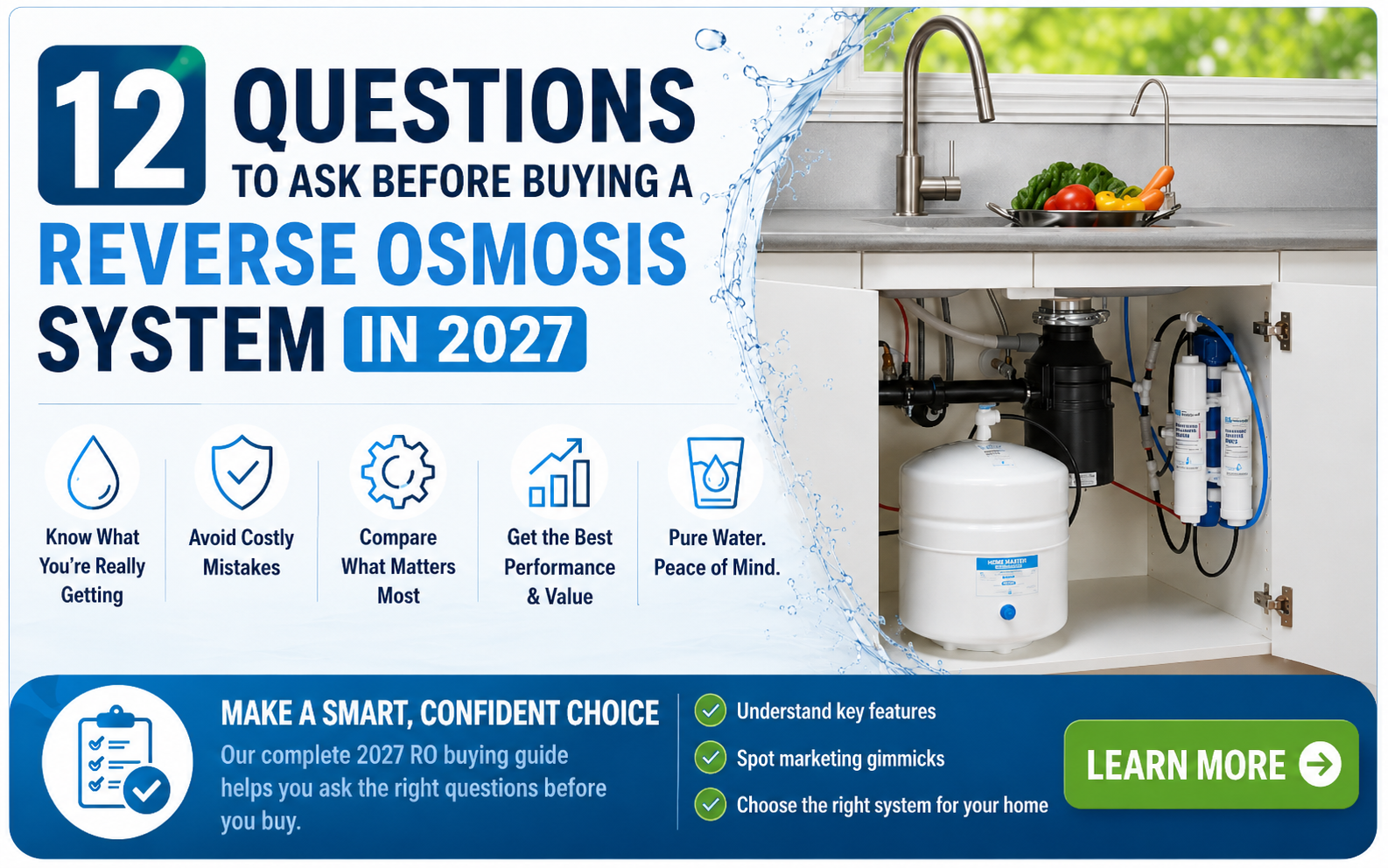
Most reverse osmosis buyers compare stage counts, gallons per day (GPD), and online reviews. Unfortunately, some of the most important differences between systems are rarely discussed by affiliate review websites, online marketplaces, or product advertisements.
Before purchasing any reverse osmosis system, consumers should consider the following questions.
1. Are Tankless Systems Really Tankless?
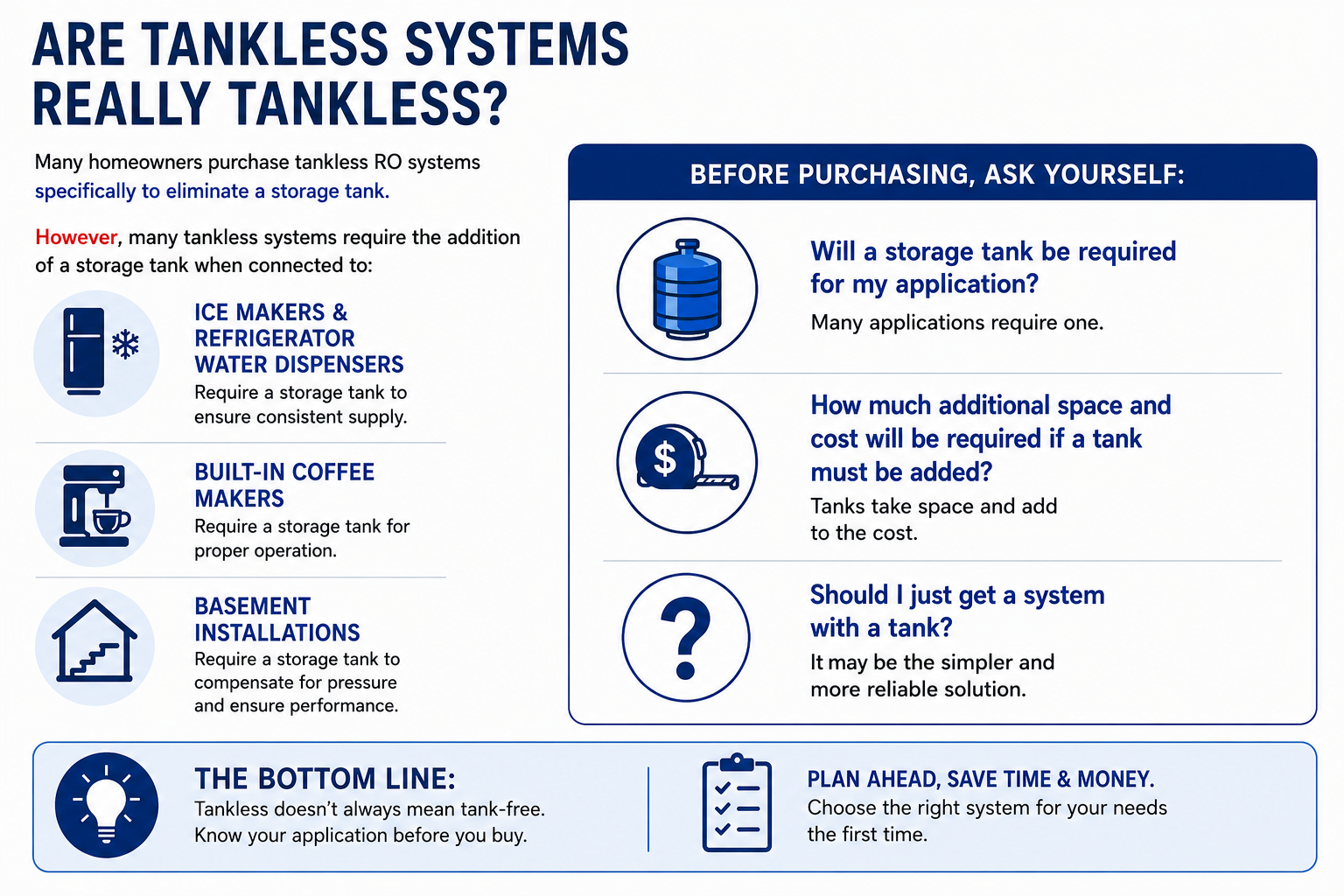
Many homeowners purchase tankless RO systems specifically to eliminate a storage tank.
However, many tankless systems require the addition of a storage tank when connected to:
- Ice makers & Refrigerator water dispensers
- Built-in coffee makers
- Basement installations
Before purchasing a tankless system, ask:
- Will a storage tank be required for my application?
- How much additional space and cost will be required if a tank must be added?
- Should I just get a system with a tank?
Many consumers discover this requirement only after installation.
2. What Happens After the Warranty Expires?
Many reverse osmosis systems contain:
- Pumps
- Circuit boards
- Sensors
- Solenoids
- Proprietary electronics
Questions to Ask
- How long is the warranty?
- Can replacement parts be purchased?
- Can the system be serviced by the homeowner?
- Are parts standardized or proprietary?
A system that is easy to service may provide lower long-term ownership costs than one that relies heavily on proprietary components.
3. What Happens to Water Purity After the System Sits Idle?
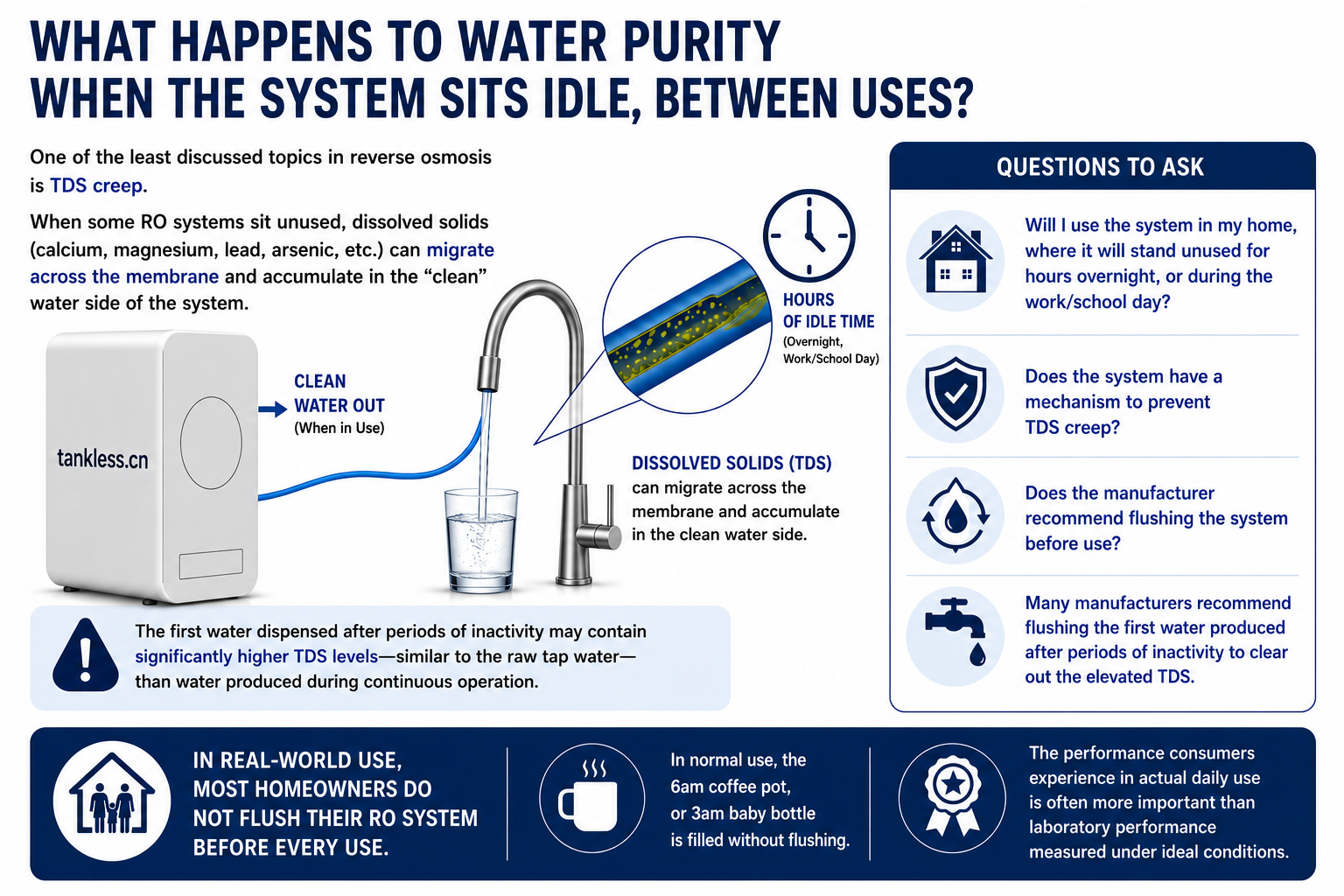
One of the least discussed topics in reverse osmosis is Total Dissolved Solids (TDS) creep.
When some RO systems sit unused, dissolved solids (calcium, magnesium, lead, arsenic, etc.) can migrate across the membrane and accumulate in the “clean” water side of the system.
The first water dispensed after periods of inactivity may contain significantly higher TDS levels, similar to the raw tap water, than water produced during continuous operation.
Questions to Ask
- Will I use the system in my home, where it will stand unused for hours overnight, or during the work/school day?
- Does the system have a mechanism to prevent TDS creep?
- Does the manufacturer recommend flushing the system before use?
Many manufacturers recommend flushing the first water produced after periods of inactivity to clear out the elevated TDS.
In real-world use, most homeowners do not flush their RO system before every use. In normal use, the 6 am coffee pot or the 3 am baby bottle is filled without flushing.
The performance consumers experience in actual daily use is often more important than laboratory performance measured under ideal conditions.
4. What Is the Actual Faucet Flow Rate?
Many tankless systems advertise membrane production rates such as:
- 300 GPD
- 600 GPD
- 800 GPD
- 1200 GPD
These numbers can create the impression that water will dispense quickly from the faucet.
However, membrane production rate and faucet flow rate are not the same thing.
Consumers should ask:
- How many seconds does it take to fill an 8-ounce glass?
- How many seconds does it take to fill a water bottle?
- How quickly can I fill a cooking pot?
- Do those fill times include any needed flushing?
Real-world dispensing performance is often a better measure of convenience than advertised GPD ratings.

Home Master Customer Review
I had a major name brand RO system in a previous home because of high nitrates. In our current home, we have decent tasting city water, with a great water softener. After watching some documentaries, I sprung for added an RO to our kitchen. What I love:
- 1 Very easy to install (I am handy, the instructions are good, hoses are color-coded).
- 2 Great tasting water - use it for drinking and cooking.
- 3 Fills fast! 8 cups in 30 seconds. See the video.
- 4 Haven't had to descale my tea pot that is used daily for the last 7 months. Used to be monthly.
- 5 Use the water in my CPAP machine instead of DI water. Saves money!
Customer supplied video: 8 cups in 30 seconds
Trusted by thousands of families nationwide.
Quality water. Real performance. Real reviews.
5. Can Biofilm Build Up Inside the System?
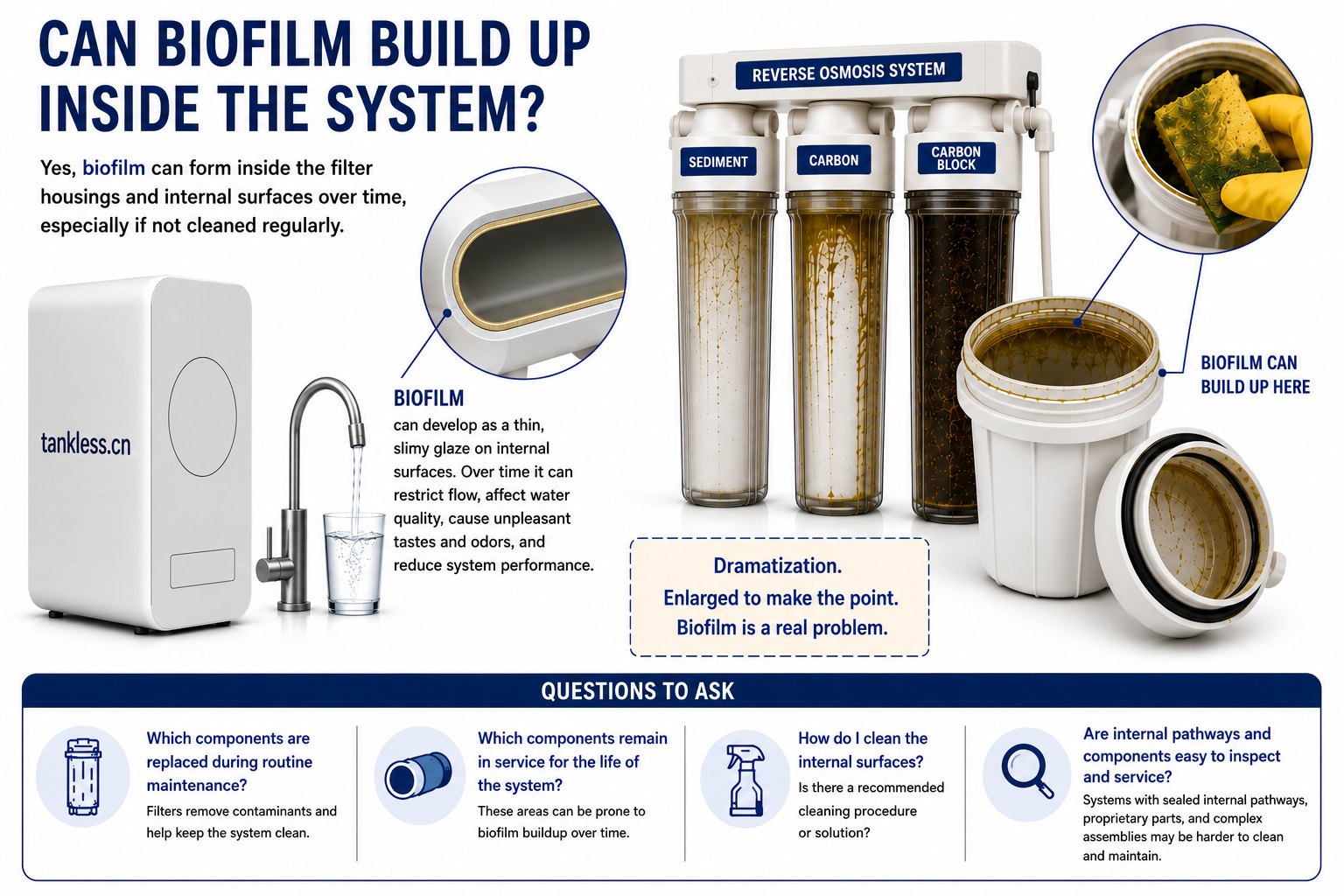
Any water treatment device can potentially develop microbial growth over the course of ownership.
Consumers should ask:
- Which components are replaced during routine maintenance?
- Which components remain in service for the life of the system?
- How do I clean the internal surfaces?
Systems with sealed internal pathways, proprietary manifolds, pumps, and electronic assemblies may be more difficult to inspect or service than systems with exposed and replaceable components.
Good maintenance practices remain essential regardless of system design.
6. How Difficult Is the System to Service?
Most RO systems require regular filter replacement.
Questions to Ask
- Will I need housing wrenches?
- How much force is required to open filter housings?
- Can I perform maintenance myself?
- How long does a filter change take?
Traditional canister systems can become difficult to open due to:
- Mineral scaling
- O-ring compression
- Forgotten/ irregular service intervals
Some homeowners postpone maintenance simply because servicing the system is frustrating.

7. How Often Should I Change Filter Housings?
Traditional canister systems often reuse the same filter housings year after year.
In many cases:
- Only the filters are replaced.
- The housings remain in service for many years.
Questions to Ask
- How often should the filter housings be replaced?
- What is the cost & time to replace the filter housings?
Replacing the filter housing more frequently may improve hygiene while reducing long-term wear and leak risk.
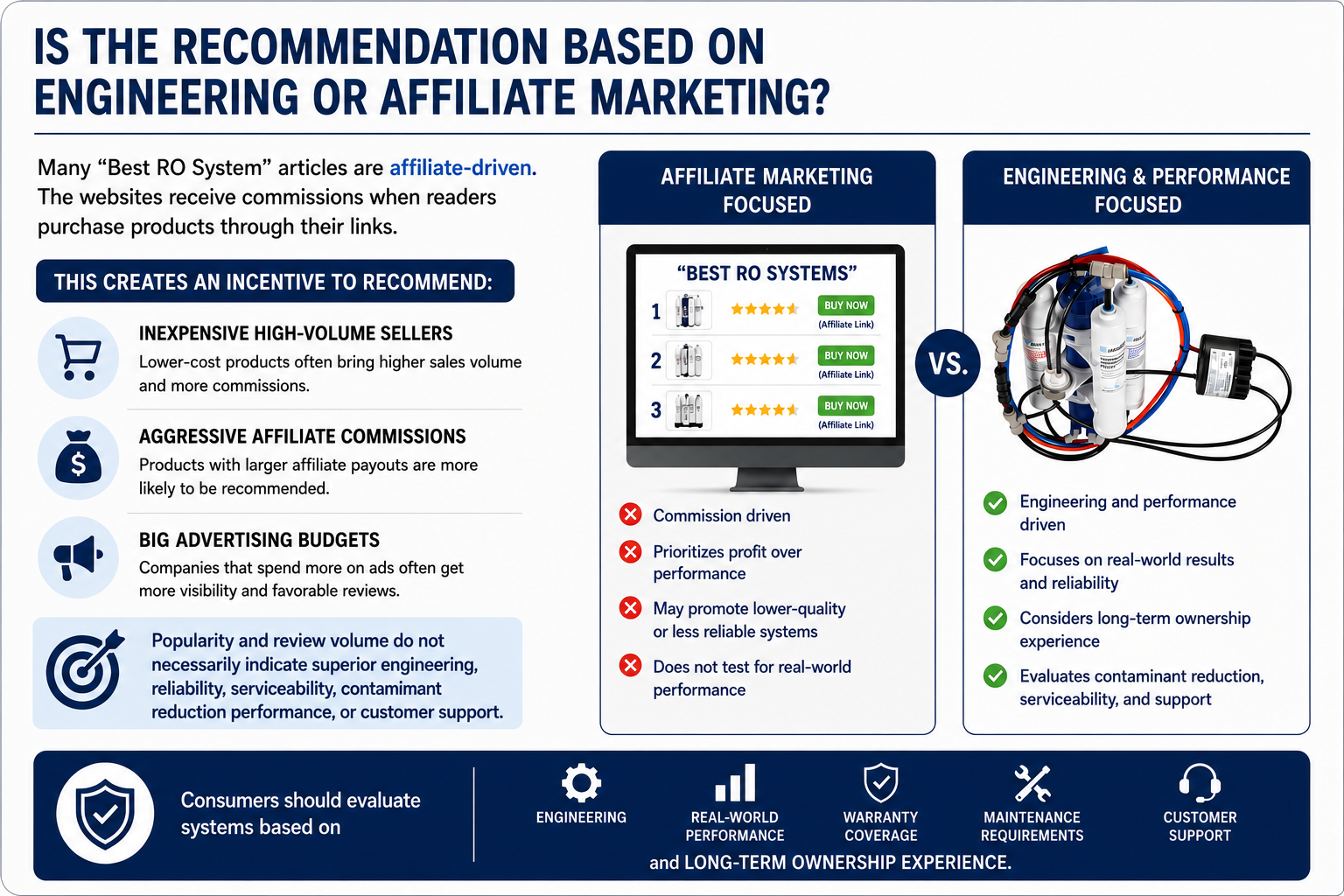
8. Is the Recommendation Based on Engineering or Affiliate Marketing?
Many “Best RO System” articles are affiliate-driven. The websites receive commissions when readers purchase products through their links.
This creates an incentive to recommend:
- Inexpensive High-volume sellers
- Aggressive affiliate program commissions
- Products with large advertising budgets
Popularity and review volume do not necessarily indicate superior engineering, reliability, serviceability, contaminant reduction performance, or customer support.
Consumers should evaluate systems based on engineering, real-world performance, warranty coverage, maintenance requirements, and long-term ownership experience.
9. Does the System Use a High-Quality RO Membrane?
The membrane is the heart of every RO system.
Questions to Ask
- What membrane manufacturer is used?
- What contaminant reduction performance is documented?
- What is the membrane rejection rate?
- Are performance claims independently verified?
Membrane quality has a significant impact on:
- Water purity
- TDS reduction
- Long-term performance
- Filter life
Many Tankless RO systems achieve higher GPD flow rates by using loosely-wound imported RO membranes that only remove 90-93% of salts and TDS.
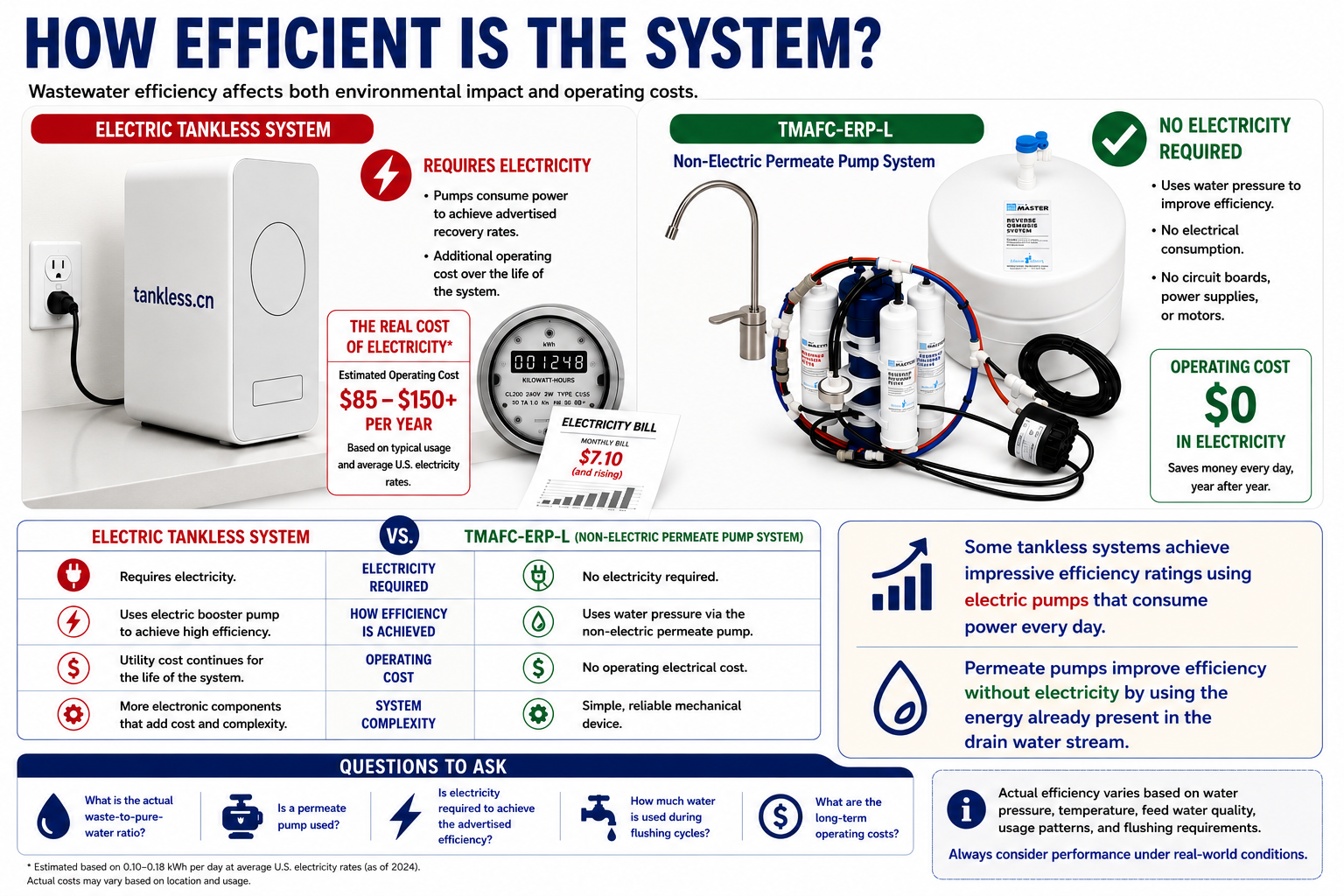
10. How Efficient Is the System?
Wastewater efficiency affects both environmental impact and operating costs.
Questions to Ask
- What is the actual waste-to-pure-water ratio?
- Is a permeate pump used?
- Is electricity required to achieve the advertised efficiency?
Consumers should compare real-world efficiency, including water lost to flushing, rather than relying solely on marketing claims in ideal conditions.
11. How Does the System Handle Remineralization?
RO water is highly purified and naturally low in dissolved minerals.
Questions to Ask
- Is the water remineralized?
- Which minerals are added?
- How are they added?
- How much contact time occurs between the water and the remineralization media?
Not all remineralization systems operate the same way.
The quality of the remineralization process can affect:
- Taste
- pH
- Mineral content
- Long-term storage characteristics
Acidic RO water, which hasn’t been remineralized, can lead to storage tank degradation.
12. Does the Manufacturer Stand Behind the Product?
Customer support is one of the most overlooked aspects of RO ownership.
Questions to Ask
- How easy is it to reach support, and are they on-shore?
- Are replacement parts readily available?
- How long has the company been in business?
- What warranty is offered?
A reverse osmosis system may remain in service for many years. Long-term support can be as important as the original purchase price.