
How Proper Hydration Can Help Reduce GI Side Effects of Semaglutide, Tirzepatide, and Retatrutide
Semaglutide and tirzepatide are widely used for weight management and metabolic health, while retatrutide is an investigational medication being studied for similar purposes. These treatments can cause gastrointestinal side effects such as nausea, vomiting, diarrhea, constipation, reduced appetite, and abdominal discomfort.
Proper hydration can help reduce or prevent some of these complications. Adequate fluid intake helps keep stools softer and easier to pass, which may reduce constipation. It also replaces fluids lost through vomiting or diarrhea and may lessen dehydration-related symptoms such as headache, dizziness, weakness, and fatigue. Although hydration may not directly stop nausea, vomiting, or diarrhea, it can reduce their consequences and help support normal kidney function.
Because reduced appetite and persistent nausea can also make drinking less appealing, individuals taking these medications may become dehydrated without immediately recognizing it. Both semaglutide and tirzepatide prescribing information warn that gastrointestinal fluid loss can lead to dehydration and, in severe cases, acute kidney injury.

Read on for a closer look at the gastrointestinal side effects associated with semaglutide, tirzepatide, and retatrutide, how hydration may help relieve applicable symptoms such as constipation, and why maintaining fluid balance should not be overlooked.
Why do GI Side Effects Matter for Hydration?
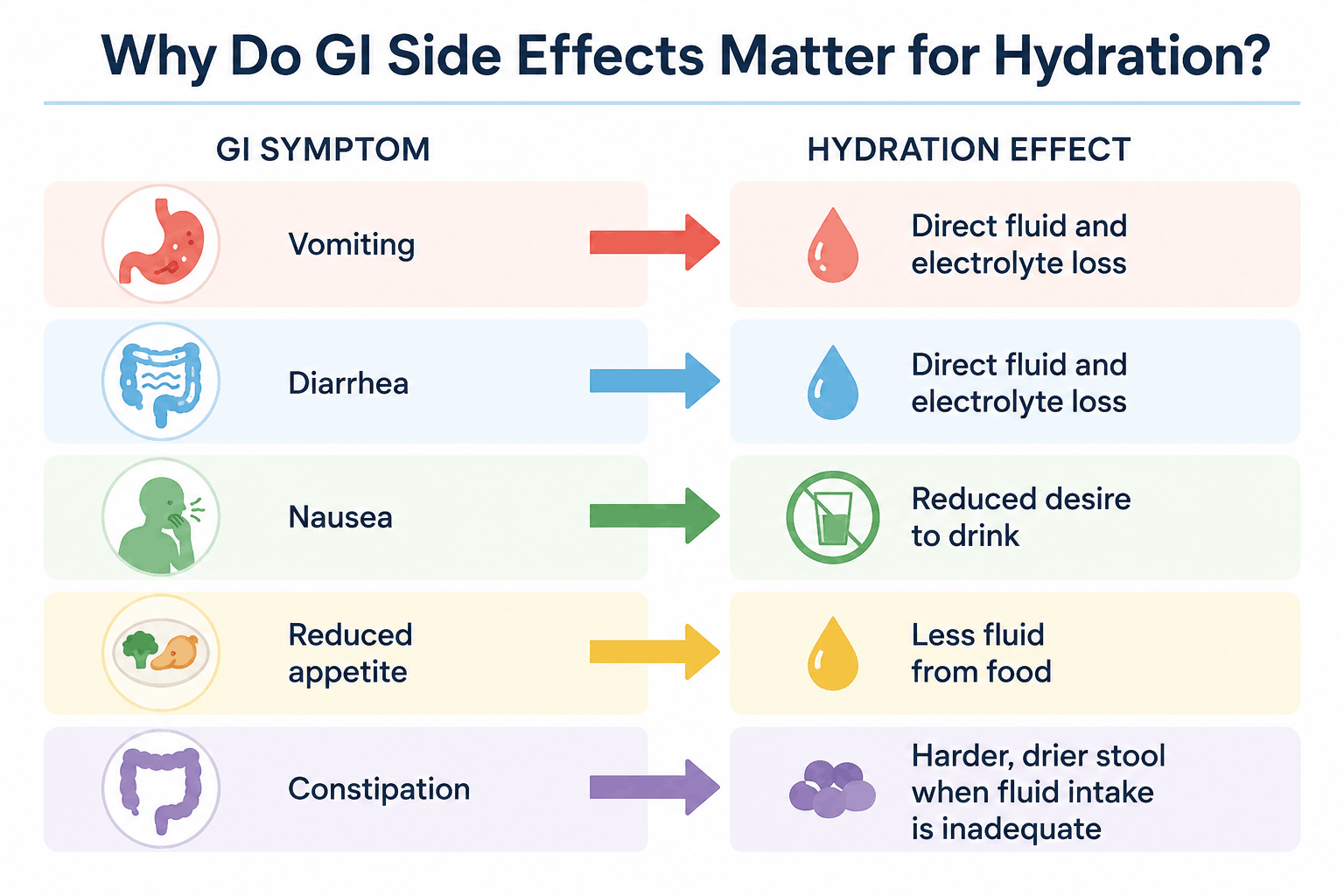
The GLP-1 activity of semaglutide, tirzepatide, and retatrutide reduces appetite and can delay stomach emptying. While these effects may contribute to weight loss, they are also associated with GI symptoms such as:
- Nausea
- Vomiting
- Diarrhea
- Constipation
- Abdominal discomfort
- Reduced appetite
Vomiting and diarrhea cause direct losses of water and electrolytes. Nausea and reduced appetite may also cause someone to drink less than usual. In addition, because part of normal fluid intake comes from foods such as fruits, vegetables, soups, and yogurt, eating substantially less may further reduce total fluid consumption.
Constipation presents a different problem. Slower digestive movement, reduced food intake, inadequate fiber, and inadequate fluid intake can combine to make stools harder and more difficult to pass.
What Does the Research Show?
Gastrointestinal (GI) side effects are a well-established effect of both medications, consistently reported across clinical trials.
Semaglutide
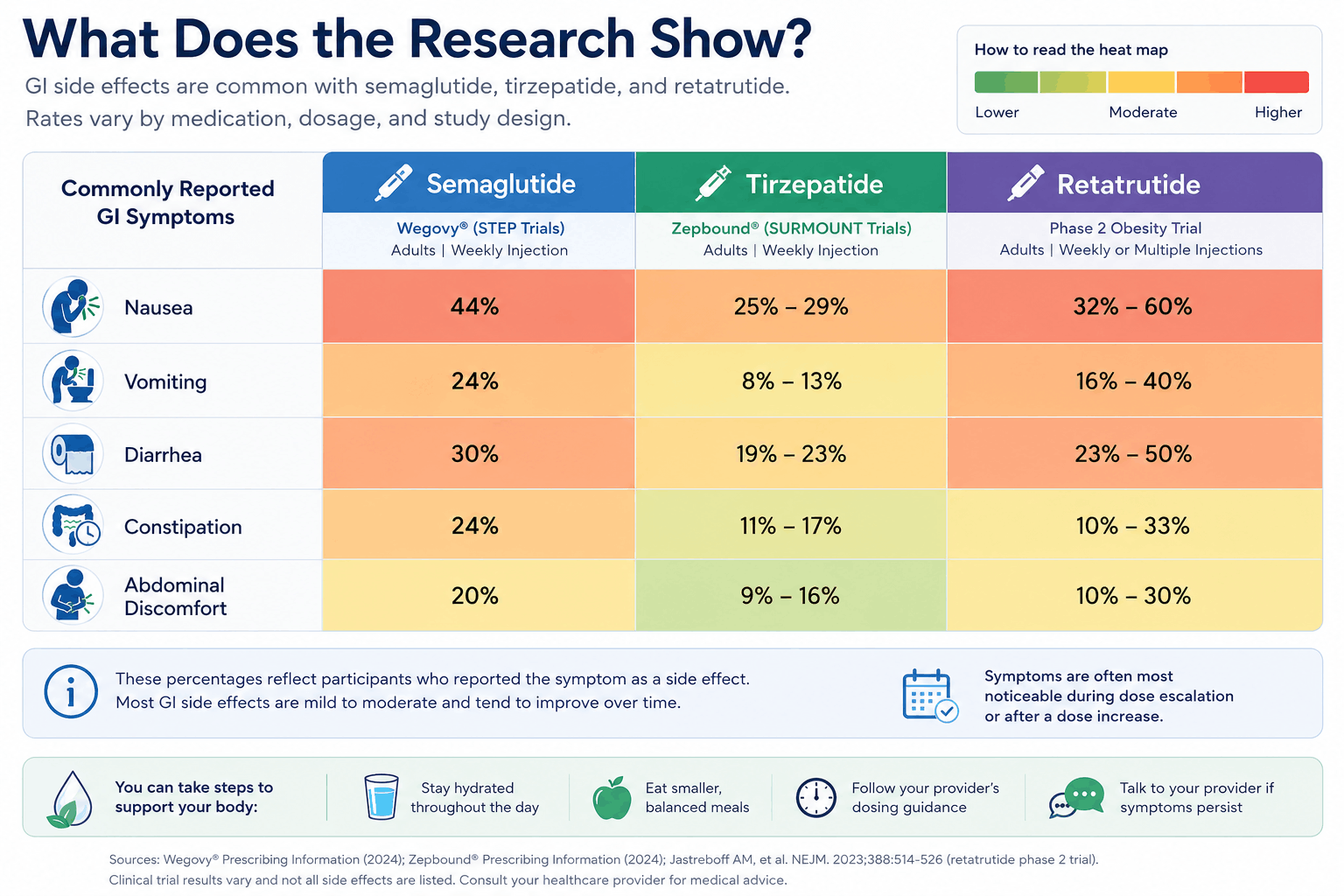
In weight-reduction trials summarized in the current Wegovy prescribing information, the following adverse reactions were reported among adults receiving weekly injectable semaglutide:
- Nausea: 44%, compared with 16% on placebo
- Diarrhea: 30%, compared with 16% on placebo
- Vomiting: 24%, compared with 6% on placebo
- Constipation: 24%, compared with 11% on placebo
Nausea, vomiting, and diarrhea were also among the most common reasons participants discontinued treatment.
Source: https://www.accessdata.fda.gov/drugsatfda_docs/label/2026/218316s004lbl.pdf316s004lbl.pdf
Tirzepatide
In pooled weight-reduction trials summarized in the current Zepbound prescribing information, rates varied by dose:
- Nausea: 25%–29%
- Diarrhea: 19%–23%
- Vomiting: 8%–13%
- Constipation: 11%–17%
Most discontinuations caused by adverse reactions occurred during the first several months and were primarily related to GI symptoms. The prescribing information uses gradual dose escalation partly to reduce the risk of gastrointestinal adverse reactions.
Source: https://www.accessdata.fda.gov/drugsatfda_docs/label/2026/217806s042lbl.pdfdf
Retatrutide
In the peer-reviewed phase 2 obesity trial, gastrointestinal events, including nausea, diarrhea, vomiting, and constipation, were the most commonly reported adverse effects. They occurred more frequently with retatrutide than with placebo, were generally mild to moderate, and increased with higher doses. A lower starting dose appeared to improve tolerability.
Retatrutide is not currently FDA-approved or available for routine prescribing. Its safety and effectiveness continue to be evaluated in clinical trials.
Across all three medications, the overall pattern is similar: GI symptoms are common and may be most noticeable during treatment initiation, dose escalation, or following a dose increase.
Source: https://www.nejm.org/doi/full/10.1056/NEJMoa2301972
https://www.lilly.com/news/stories/what-to-know-about-retatrutide
How Proper Hydration May Help
Constipation
Adequate fluid intake can help keep stools softer and easier to pass. (Learn more about hydration and constipation). Fluids are especially important when increasing dietary fiber because water helps fiber add softness and bulk to stool.
Research suggests that additional fluid can improve the effect of a high-fiber diet in people with functional constipation. However, simply drinking excessive water does not reliably resolve constipation in someone who is already adequately hydrated. Hydration is therefore an important part of constipation management, but it may need to be combined with appropriate fiber intake, physical activity, medication adjustment, or other treatment recommended by a healthcare provider.
Source: https://www.niddk.nih.gov/health-information/digestive-diseases/constipation/treatment
Vomiting and Diarrhea
Proper hydration helps replace the fluids lost through vomiting and diarrhea and supports normal circulation, kidney function, and electrolyte balance during recovery. Because repeated fluid loss can also reduce sodium, potassium, chloride, and other electrolytes, maintaining hydration can help the body preserve essential functions and reduce dehydration-related complications.
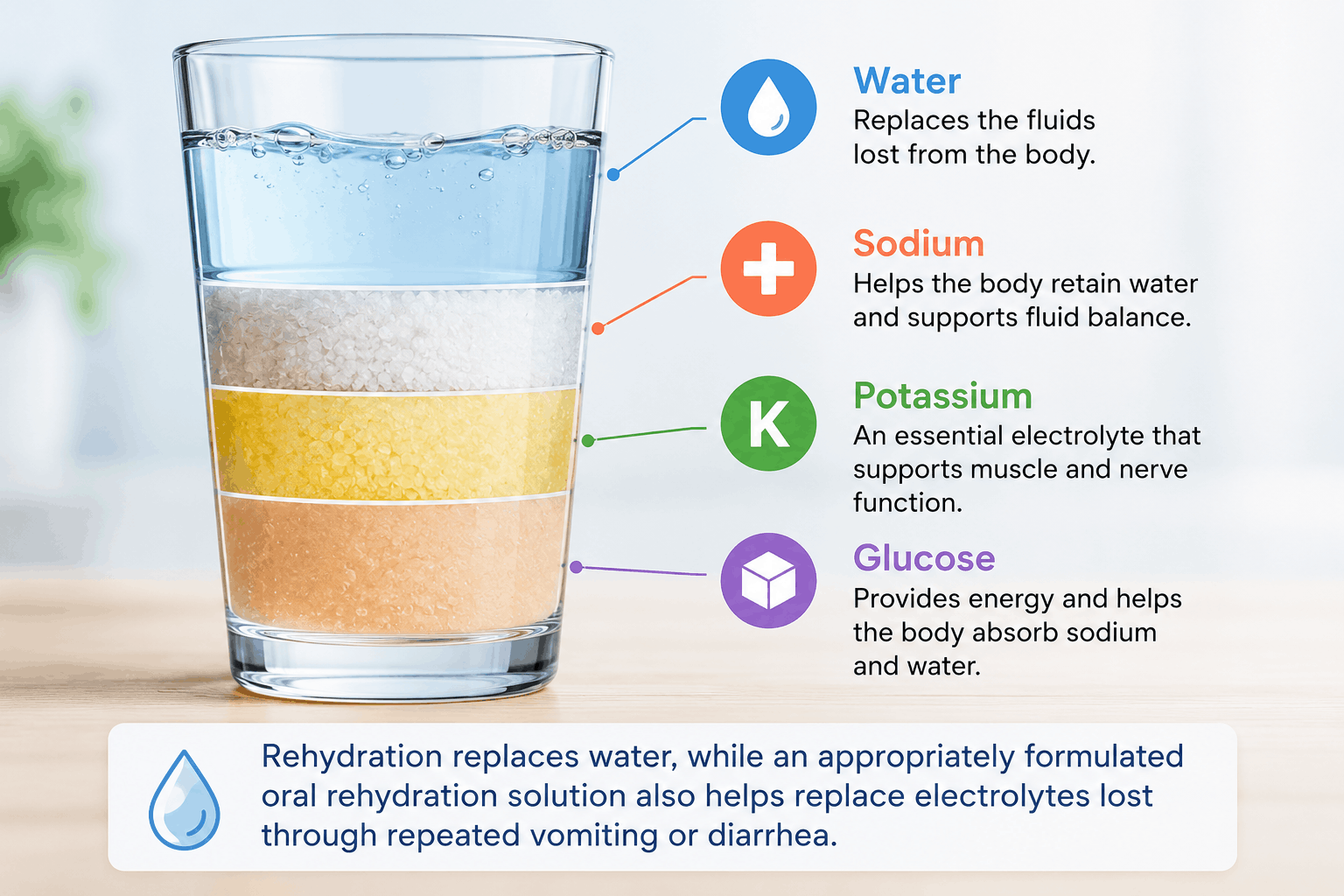
For mild symptoms, water combined with normal meals may provide adequate replacement. When fluid losses are greater, an appropriately formulated oral rehydration solution can help restore both water and electrolytes.
Source: https://www.who.int/en/news-room/fact-sheets/detail/diarrhoeal-disease
Nausea and Reduced Appetite
Maintaining fluid intake is especially important when food consumption decreases because water-rich foods normally contribute a meaningful portion of daily hydration.

A consistent hydration routine can help maintain fluid intake when nausea or reduced appetite makes normal eating and drinking more difficult. Small, frequent sips are often easier to tolerate than consuming a large amount at once and can help individuals steadily meet their hydration needs throughout the day.
Hydration and Weight Management: How RO Water Affects Your Metabolism
Headache, Dizziness, Weakness, and Fatigue
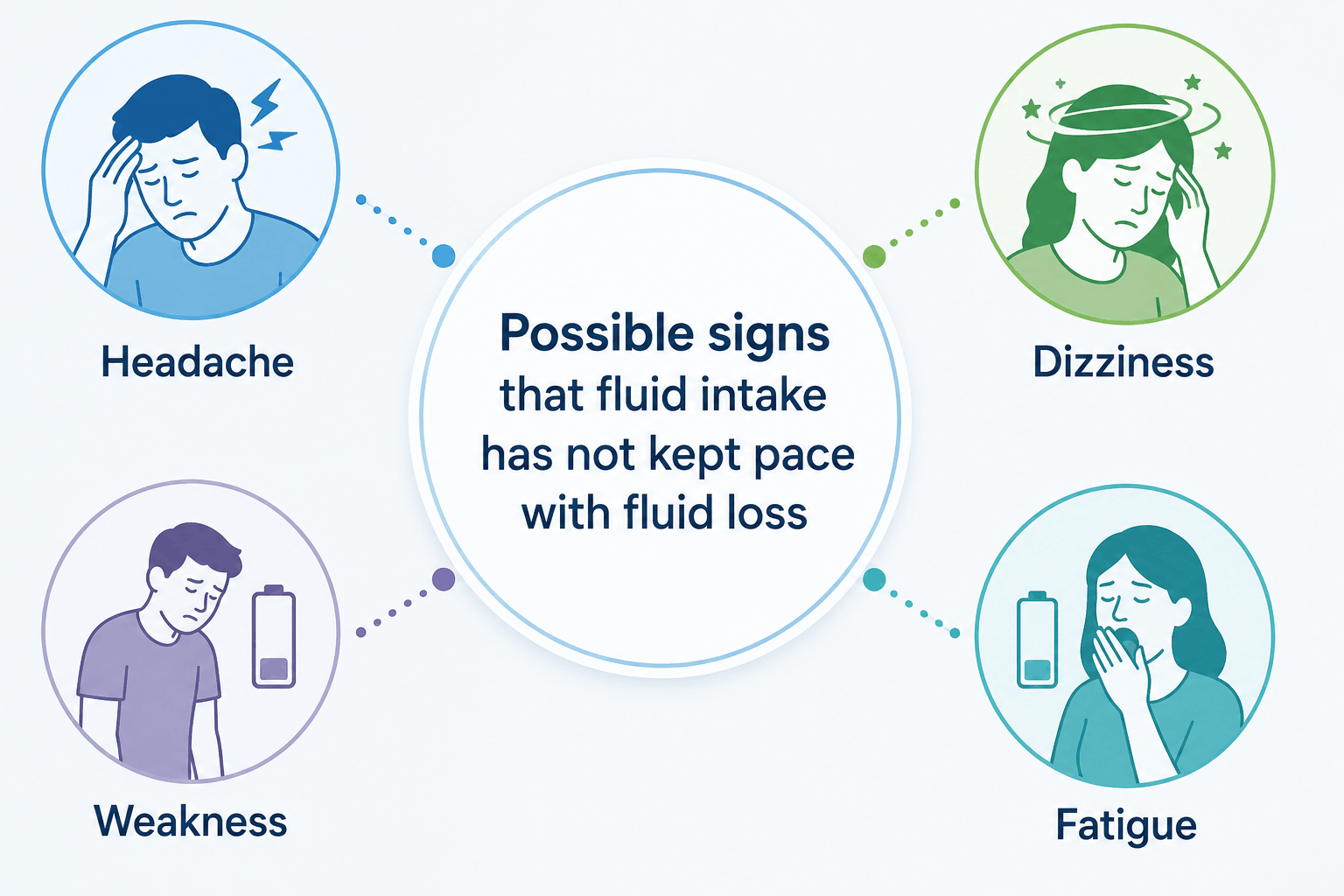
Proper hydration can help reduce headache, dizziness, weakness, and fatigue when these symptoms are related to dehydration. Replacing fluids supports normal blood volume, circulation, temperature regulation, and physical and cognitive function.
Hydration and Cognitive Function: How Drinking Water Supports Brain Health
Improvement after drinking fluids may indicate that dehydration was contributing to the symptoms. However, symptoms that persist despite adequate hydration should be discussed with a healthcare provider because they may have another cause.
Hydration and Energy Levels: How Water Helps You Stay Energized
The Dehydration-Kidney Connection
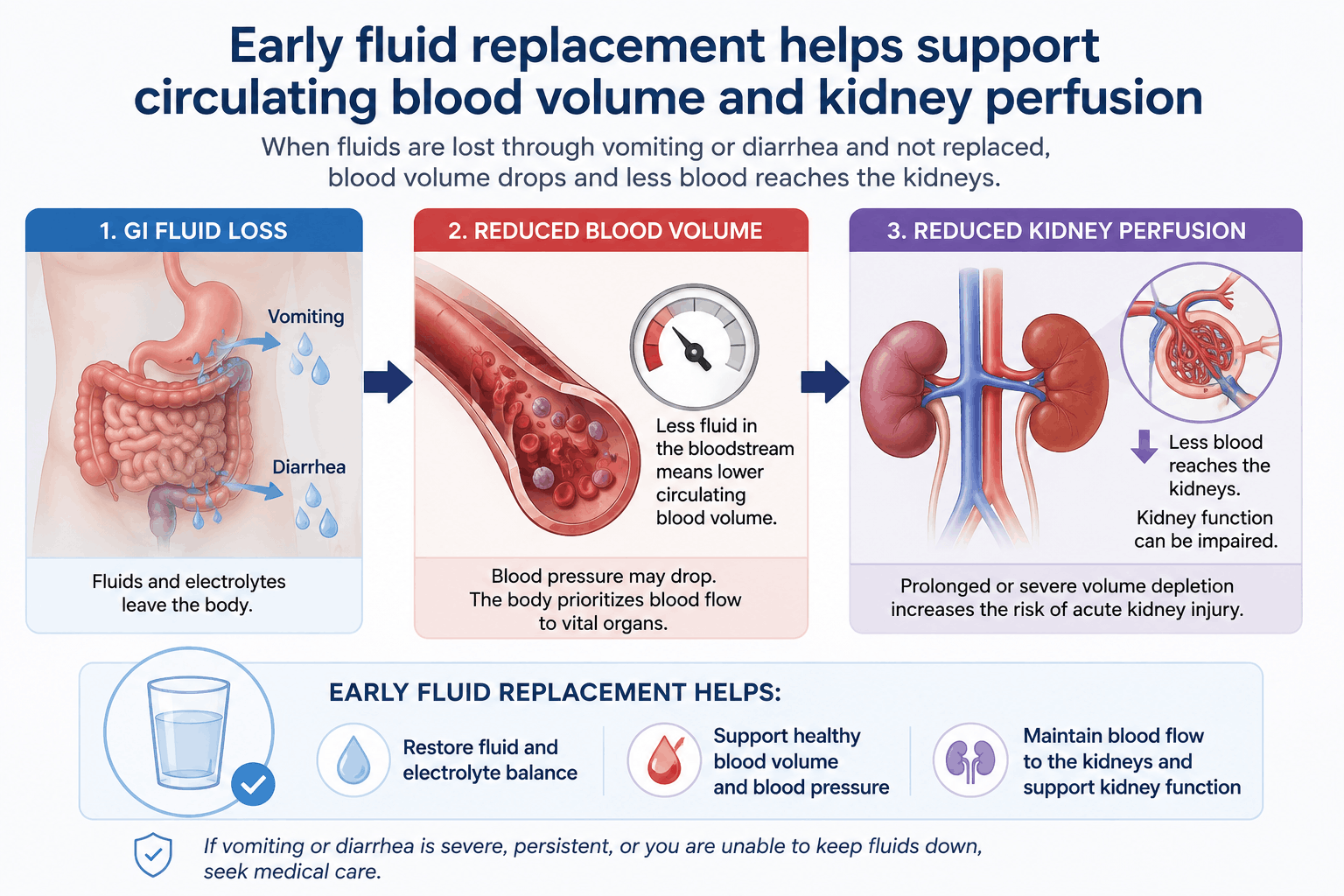
The kidneys continuously filter the blood, remove waste, and regulate the body’s balance of water and electrolytes. To perform these functions properly, they need an adequate supply of circulating blood.
Vomiting, diarrhea, and substantially reduced fluid intake can cause the body to lose more fluid than it replaces. As dehydration develops, the volume of blood circulating through the body decreases, a condition known as volume depletion. With less blood reaching the kidneys, their filtration rate can fall. If this reduction becomes severe or continues for too long, it can lead to acute kidney injury, meaning that kidney function declines over a relatively short period.
The current prescribing information for both Wegovy and Zepbound warns about acute kidney injury related to volume depletion. Postmarketing reports have included severe cases requiring hemodialysis, a temporary treatment that filters the blood when the kidneys cannot adequately perform that function. Most reported cases occurred in people experiencing nausea, vomiting, diarrhea, or other gastrointestinal symptoms that caused substantial dehydration.
Maintaining proper hydration helps preserve circulating blood volume and supports the steady flow of blood needed for normal kidney filtration. This is especially important when GI symptoms are causing direct fluid loss or making it difficult to eat and drink normally.
The prescribing information advises healthcare providers to monitor kidney function when patients develop symptoms that could cause significant fluid depletion, particularly when treatment is started or the dosage is increased. Recognizing and addressing dehydration early may help prevent temporary fluid loss from progressing into a more serious kidney complication.
Hydration and Kidney Function: The Importance of Drinking Enough Water
Source: https://www.accessdata.fda.gov/drugsatfda_docs/label/2025/217806Orig1s020lbl.pdf
Practical Hydration Tips
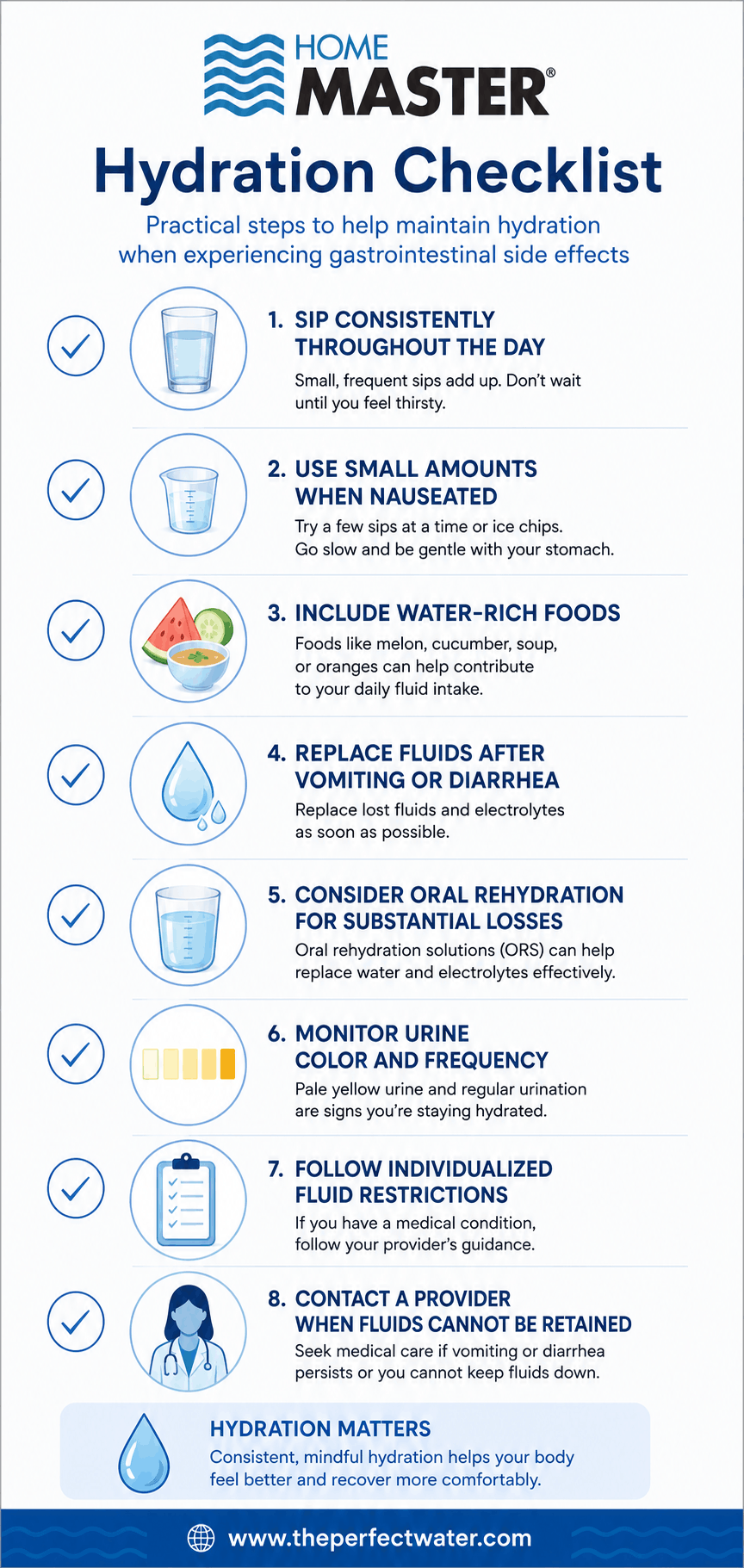
People prescribed semaglutide or tirzepatide, or participants receiving retatrutide in a clinical trial, may find the following practices helpful:
-
Drink fluids consistently throughout the day rather than relying entirely on thirst.
-
Take small, frequent sips when nausea makes larger amounts difficult to tolerate.
-
Pair adequate fluid intake with appropriate dietary fiber when addressing constipation.
-
Replace fluids lost through vomiting or diarrhea.
-
Consider an oral rehydration solution when vomiting or diarrhea is repeated or substantial.
-
Watch for dark urine, reduced urination, dry mouth, unusual weakness, dizziness, or lightheadedness.
-
Discuss persistent constipation with a healthcare provider rather than continually adding more water or fiber.
People with heart failure, kidney disease, liver disease, or another condition requiring fluid restriction should follow individualized medical guidance rather than increasing fluid intake independently.
Explore more health and hydration resources
When to Contact a Healthcare Provider?
Medical guidance is appropriate when symptoms are severe, persistent, or make it difficult to maintain fluid intake. Promptly contact a healthcare provider for:
-
Repeated vomiting or an inability to keep fluids down
-
Severe or prolonged diarrhea
-
Very little or no urination
-
Fainting, confusion, or severe weakness
-
Severe or persistent abdominal pain
-
Significant abdominal swelling
-
Constipation accompanied by vomiting or an inability to pass stool or gas
-
Symptoms that worsen after a dosage increase
Severe constipation, fecal impaction, ileus, and intestinal obstruction have been reported during postmarketing use of semaglutide, so serious or unusual symptoms should not be managed with hydration alone.
Source: https://www.accessdata.fda.gov/drugsatfda_docs/label/2026/218316s004lbl.pdf
Hydration Is Supportive, Not a Substitute for Treatment
Proper hydration may help relieve constipation, replace fluids lost through vomiting or diarrhea, and reduce dehydration-related symptoms. It does not necessarily prevent the medications from causing GI adverse effects, and it does not increase their weight-loss effects.
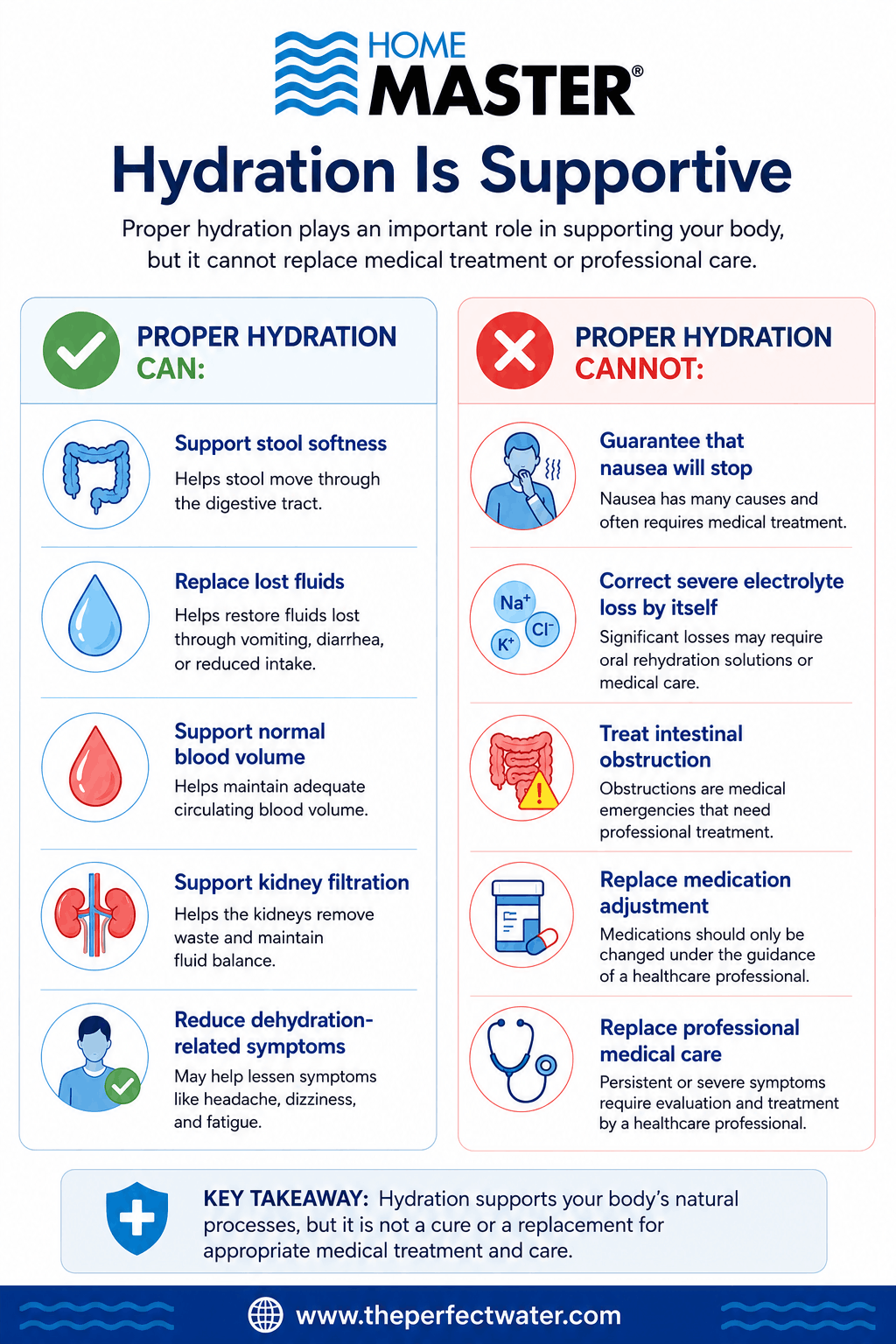
Persistent symptoms may require a slower dosage increase, a lower dosage, dietary changes, symptom-specific treatment, laboratory testing, or discontinuation under the direction of a healthcare provider.
Final Thoughts
GI side effects are among the most commonly reported adverse reactions associated with semaglutide, tirzepatide, and retatrutide. Because these symptoms can either increase fluid loss or decrease fluid intake, paying attention to hydration is an important part of using these treatments safely.
Hydration is particularly relevant for constipation and for replacing fluid lost through vomiting or diarrhea. However, it should be viewed as supportive care—not as a cure for every medication-related GI symptom or as a replacement for professional medical evaluation.
|
Note: This article is for educational purposes only and is not intended to provide medical advice. Consult your healthcare provider regarding any questions about medications, hydration, weight loss, or overall health. |