
Morning Energy Starts With Last Night's Water
Most people associate low morning energy with poor sleep, stress, or busy schedules. But hydration is often overlooked, especially the water your body receives before sleep and immediately after waking up.
During the night, the body continues to lose water through breathing, circulation, and natural repair processes. After six to eight hours without fluid intake, even mild dehydration can affect how you feel in the morning.
A tired start to the day is not always about a lack of rest. Sometimes it begins with dehydration.
What Happens to the Body Overnight?
While you sleep, your body remains active.
It continues to:
-
Regulate temperature
-
Support organ function
-
Repair cells and tissues
-
Maintain blood circulation
-
Process waste and toxins
All of these functions require water.
By morning, the body naturally wakes up in a mildly dehydrated state. This is why many people experience:
-
Dry mouth
-
Head heaviness
-
Sluggishness
-
Low focus
-
Fatigue despite sleeping enough hours
Hydration plays a direct role in helping the body transition smoothly from rest to activity.

Why Morning Energy Depends on Hydration?
Water supports several systems connected to energy and alertness.
Better circulation
Hydration keeps the blood flowing properly and enables oxygen and other essential nutrients to flow freely in your body.
Improved brain function
Even mild dehydration can affect concentration and increase mental fatigue. Starting the day properly hydrated helps support sharper focus and mental clarity.
Natural Digestive Support
Water supports normal digestion and metabolism early in the day. It also helps the body move and eliminate waste after an overnight fast.
Reduced Morning Fatigue
People often reach for caffeine without realizing they may simply be dehydrated. Drinking water after waking can help restore fluids and support a more naturally refreshed, alert feeling.
The Importance of Drinking Water Before Bed
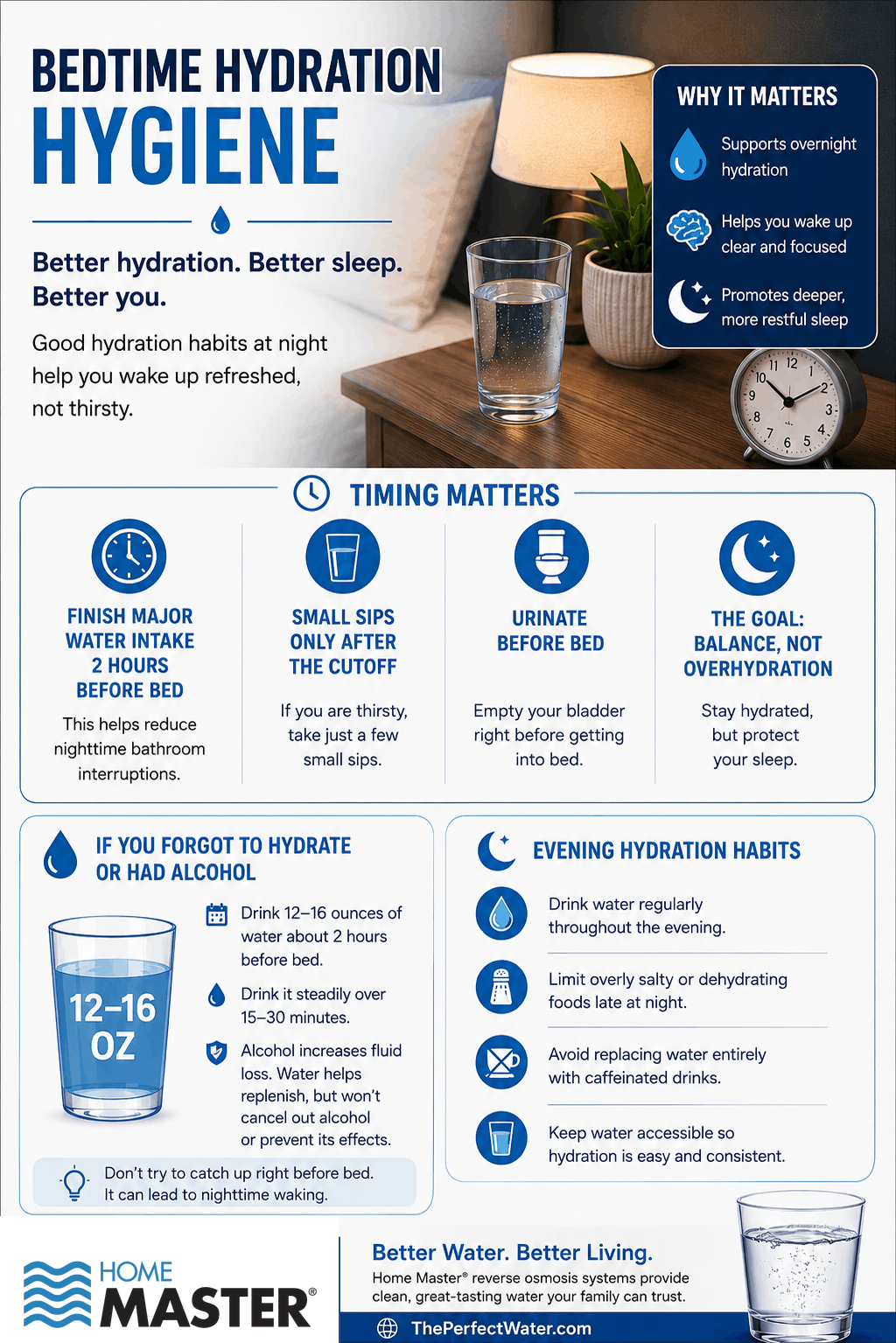
Steady evening hydration can help prevent waking up dehydrated, but drinking too much too late may interrupt sleep.
A practical approach is to:
-
Drink water consistently throughout the day and early evening
-
Finish normal water intake two hours before bedtime
-
If you forgot to hydrate, or consumed alcohol, drink 12–16 ounces of water about two hours before bed, rather than trying to catch up immediately before sleep
-
Drink it steadily over 15–30 minutes instead of rapidly chugging a large amount
-
After the cutoff, take only small sips if thirsty
-
Urinate immediately before getting into bed
The goal is to stay consistently hydrated without disrupting sleep.
Why Water Quality Also Matters?
Hydration is not only about quantity. The quality of water matters too.
Water used daily for drinking should be:
-
Clean
-
Safe
-
Fresh-tasting
-
Free from harmful contaminants
Poor-tasting or unpleasant-smelling water can discourage people from drinking enough throughout the day. Having purified, great-tasting water readily available at home makes consistent hydration easier and more enjoyable.
Simple Habits for Better Morning Energy
Small, consistent hydration habits can help you feel more refreshed and alert in the morning.
Before bed
-
Drink water steadily throughout the evening
-
Limit very salty foods and excess alcohol late at night
-
Do not rely on caffeinated drinks for hydration
-
Finish most water intake about two hours before bed
After waking
-
Drink a glass of water before coffee or tea
-
Keep fresh water readily available
-
Continue drinking consistently throughout the day
Consistency matters more than trying to catch up all at once.
Making Proper Hydration Easier
A reverse osmosis system does not create energy, but it can make healthy hydration easier.
When water tastes clean and fresh, people are often more likely to drink it consistently. Staying hydrated in the evening and drinking water after waking can support normal concentration, digestion, and overall morning alertness.
A quality RO system provides water that is:
-
Reduced in many dissolved contaminants
-
Fresh-tasting and free from unpleasant odors
-
Readily available for drinking, cooking, and beverages
-
Convenient for the entire family
Good hydration habits begin with having water you enjoy drinking. By improving water quality and convenience, reverse osmosis can help support more consistent hydration and a better start to the day.
A Better Morning Often Starts the Night Before
Morning energy is influenced by many factors, but hydration is one of the simplest and most overlooked.
Supporting the body with enough clean water before and after sleep can help improve:
-
Alertness
-
Focus
-
Physical comfort
-
Daily energy levels
Sometimes, feeling better in the morning does not require a major routine change. It starts with something as simple as proper hydration the night before.