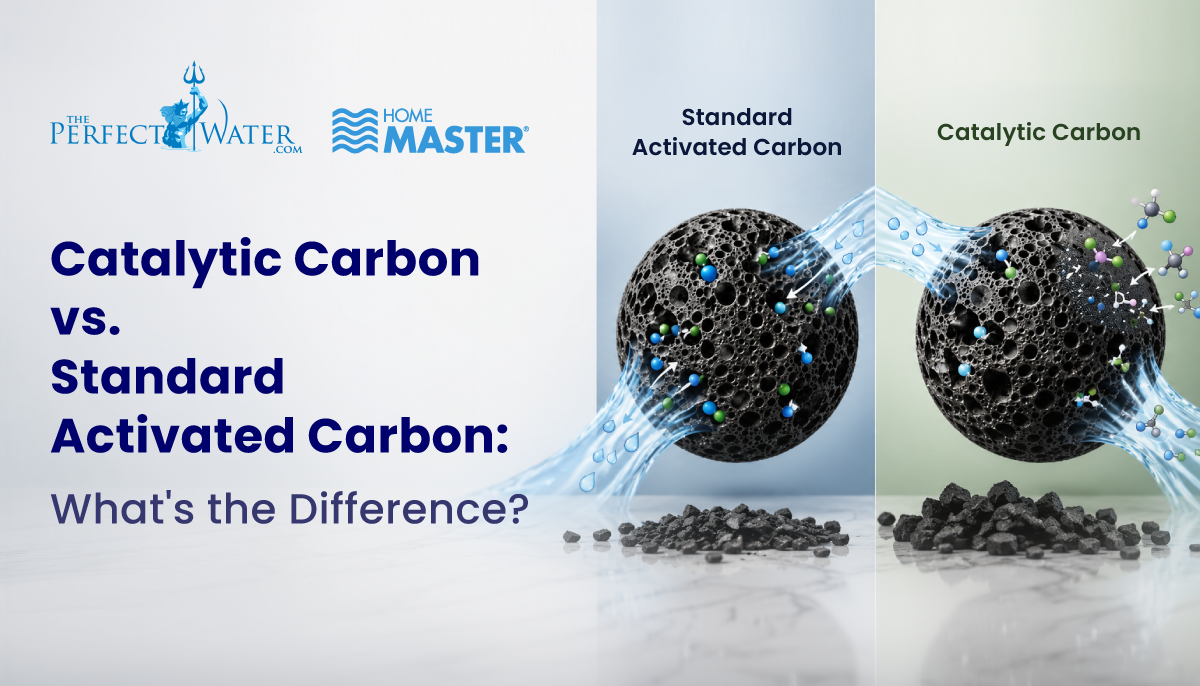
When comparing a catalytic carbon vs. an activated carbon water filter, the biggest difference is chloramine removal. Standard activated carbon is somewhat effective in chlorine removal, but catalytic carbon is made specifically to decompose chloramines, particularly in whole-house water filters where chlorinated municipal water is used.
Activated Carbon — Adsorption Process
Water flows through highly porous activated carbon with an extensive internal surface area.
Chlorine, volatile organic compounds, dissolved gases, and many other chemicals are captured primarily through adsorption, meaning they adhere to the carbon’s surface.
Catalytic carbon provides the same adsorption benefits while also promoting chemical reactions that improve the reduction of difficult contaminants such as chloramine and hydrogen sulfide.
Iodine rating: Expressed in milligrams per gram (mg/g), the iodine rating indicates the carbon’s relative activation level and capacity to adsorb small molecules within its micropores.
When comparing activated carbon with reverse osmosis, both remove a broad range of contaminants, but they target different categories. Activated carbon is highly effective at reducing chlorine, dissolved gases, tastes and odors, volatile organic compounds (VOCs), and many other organic chemicals. Most commonly used home RO membranes (TFC) require the use of a pre-carbon filter to remove chloramine, which otherwise would damage the RO membrane. Reverse osmosis uses a semipermeable membrane to remove a wider range of dissolved contaminants, including heavy metals, fluoride, PFAS, and inorganic salts, typically reducing total dissolved solids (TDS) by up to 99% when used and maintained as directed.
Quick Summary
Activated carbon filters can enhance taste and get rid of chlorine, radon, and other chemicals
Reverse osmosis is capable of removing dissolved contaminants and heavy metals
Reverse osmosis systems have better results when dealing with PFAS, fluoride, arsenic 5, and chromium
California has some of the strictest drinking water laws in the United States. However, despite these regulations, California’s water quality and arsenic and nitrate contamination remain widespread concerns throughout many groundwater sources. These contaminants originate from both natural geological conditions and human activity, and they continue to affect drinking water supplies used by homes across the state.
Routine water testing frequently reveals contamination levels that homeowners cannot afford to ignore. Residents, particularly those relying on private wells or groundwater systems, are increasingly seeking reliable long-term treatment solutions capable of reducing these contaminants at the tap.
Arsenic in California Drinking Water
Where Arsenic Comes From?
Arsenic enters California drinking water through both natural and man-made pathways.
Natural Sources
As groundwater moves through arsenic-bearing rock and soil formations, trace amounts of arsenic dissolve into the water
Texas ranks among the top six hardest-water states in the country. It is one of the most widespread and underaddressed household problems in the state. With average hardness levels exceeding 200 PPM, well above the USGS threshold of 180 PPM for "very hard," hard water in Texas, consequences go beyond faucet buildup: hard water affects skin, shortens appliance lifespan, increases energy costs, and gradually damages plumbing.
Quick Summary
Texas hard water has a concentration greater than 200 ppm and is known as “very hard water” as per the USGS
The reason for hard water is the presence of calcium and magnesium due to limestone formations
At home, the impact of hard water includes limescale formation, inefficiency in appliances, and corrosion of pipes
Hard water skin problems in Texas include dryness, irritation, and increased eczema risk
Solutions include whole-house water softeners and RO systems
Under-sink RO systems are effective for drinking water in hard water areas. The system should
The CDC estimates that about 1.1 million people in the United States fall sick from germs in drinking water every year. This makes having a reliable home filtration system not just a convenience, but an important step for protecting your health. And once you decide you need a filter, the next question becomes: which type is right for you?
When it comes to a countertop vs. faucet-mounted water filter, both can deliver quality and better-tasting water. The difference is in the way that they work, the amount of water they can filter, how they fit in your space, and the contaminants which they filter. Counter-top systems, in general, offer more comprehensive water purification capabilities and longer filter life than faucet-mounted units.
Once you have gained this insight, it becomes easier for you to choose which one is best for your needs.
Why Tap Water Sometimes Needs Extra Help?
There are many possible contaminants in tap water, such as:
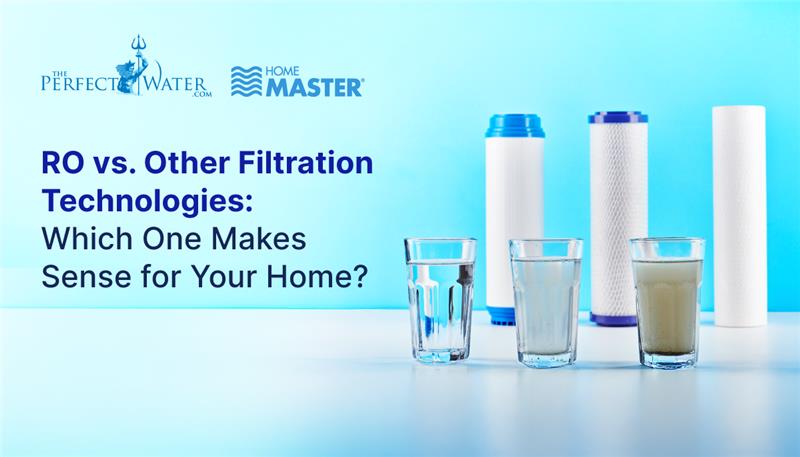
Homeowners usually hit a wall after researching water filtration systems. Reverse osmosis and simpler filtration systems are often the choices they come across. The decision usually comes before any brand comparison and focuses on whether reverse osmosis is necessary.
In the U.S., water filtration is now standard, with research showing that about 91% of households use some form of home water filter. A reverse osmosis system is widely regarded as the most comprehensive option, but it is also complex. Whereas alternative technologies are simpler solutions for water issues.
It's not about choosing the most advanced system, but about identifying the filtration technology that aligns with actual water quality conditions. A comparison of reverse osmosis and other standard filtration methods is presented to clarify where each approach fits best. Apart from technology, we also examine how reverse osmosis system design affects performance over time.
Reverse osmosis systems are often associated with high water waste, mainly because earlier residential systems were engineered that way. According to the EPA’s WaterSense specification for point-of-use RO systems, a typical system can generate five gallons or more of reject water for every gallon of treated water.
Today, reverse osmosis is still viewed with prejudice by homeowners looking for RO water filter systems to remove dissolved solids, chlorine, and heavy metals. The hesitation is rarely about water quality, but about whether the purification benefits justify the amount of water wasted.
What is less widely recognized is how much this equation has changed. In modern, eco-friendly RO systems, pressure, flow, and recovery are more precisely managed. Including under-sink RO systems, wastewater is no longer an uncontrolled byproduct but a variable shaped by system design and filter selection.
Understanding where that waste originates and how newer eco-friendly RO systems reduce it without
You always hope that when you turn on the tap, the water will be crystal clear, totally clean, and, well, smell like nothing. But sometimes an uninvited guest crashes the party and makes its presence known with a tell-tale stink: hydrogen sulfide. If your water occasionally hits your nose with that distinct “rotten egg” smell, you’re not alone. Figuring out what’s causing it and what to do is a big step towards getting your water exactly where you want it – top-notch.
So, What's Hydrogen Sulfide All About?
Hydrogen sulfide (H₂S) is a gas you can’t see, but you can smell it! It’s the same stuff that gives rotten eggs their smell. In your water, it pops up because of a couple of common reasons. Picture this: groundwater seeps through the earth, picking up minerals along the way. If those minerals contain sulfur and they find themselves in an environment with no oxygen, which is pretty common underground, certain types of “sulfur bacteria” get to work. These little microbes are clever. They
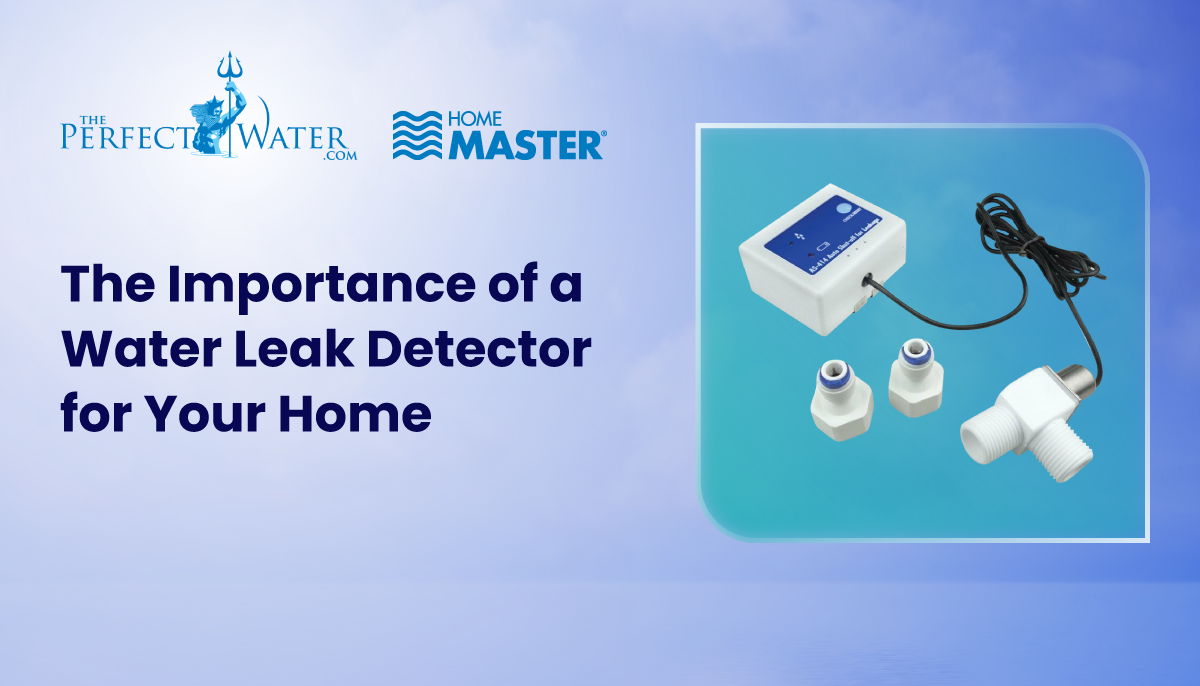
A study by the Insurance Information Institute found that the average water damage insurance claim for house owners is $13,953 for 2018-2022 for homes with water leaks. Water and plumbing leakage is one of the major concerns for home owners. A water leak detector is a good solution to identify and receive alerts about water leaks to prevent damage and water waste. The water leak detector can be easily installed in line with the home’s plumbing and can monitor the water flow, detect the leakage, and then automatically shut off with an alert to prevent water waste and water leakage damage.
Why Every Home Needs a Water Leak Detector
Every home needs a water leak detector; why?
Water leakage and the structural damages due to water leakage cause hefty expenses and insurance premiums for house owners. It’s one of the common causes of house property damage that needs to be prevented to save homes and money. That’s why every home needs a water leak detector or under-sink leak detector to prevent
If your water has a bitter taste, causes stains, or leads to stomach discomfort, sulfates may be present in your water supply. This guide explains how to test for sulfates and the most effective water treatment solutions to improve your water quality.
Notice an unfamiliar taste in your morning coffee, mysterious stains on white laundry, or guests complaining about unexpected stomach discomfort after staying with you. Those problems often have the same culprit: sulfate contamination.
At The Perfect Water, we've helped hundreds of American households tackle their water quality challenges. This guide is built on our years of experience in the water treatment industry. We'll cover everything from affordable testing methods to effective treatment solutions that address your specific sulfate concerns.
Our goal is to give you the practical knowledge you need to solve your water quality problems efficiently and economically. That means—unpleasant tastes, appliance damage, or potential health